Holding Out Hope for A Robin’s Nest
This is our third spring on the Wren Ranch, and the third time the same robin has built a nest in the grapevines, exactly in this spot — we know, because each fall we cut the vines back and remove the old nest, only to find a new nest in early – to mid-May. That our robin has again built her nest in this location amazes us, since she’s never managed to actually get past the incubation stage: each year, a crow robs the nest, eats the eggs, then deposits the shells on the fence post (which it has likely used to steady the egg, while cracking it open). The nest is visible in the center of the photo; it’s sloppy on the outside, tidy on the inside, smooth and lined with mud.
Here is the same grapevine, but from a different perspective. The nest is barely visible from this distance, so it’s astonishing that crows manage to find it — except they’re voyeurs, spying on the comings and goings of birds; they know exactly when a mama has left her nest. It’s difficult to not like a bird that is crafty enough to find a nest that’s as well-hidden as this one; on the flip side, it’s easy to disdain a bird that eats the eggs and young of another.
This photo, too, demonstrates how well the nest is hidden. If nestlings do come forth, they’ll have to stay quiet for almost 16 days, a lifetime, perhaps, to a robin mother, and the homeowners hoping they’ll fledge.
Great Blue Heron with Youngsters
Steve recently took this photo of a great blue heron and three youngsters near San Jose Island, across the bay from Corpus Christi, Texas. Young birds are attended by both parents, and there is always an adult present during the chicks’ first three to four weeks of life. They’ll fly at around 60 days, and leave the nest at 64-90 days, when they’ll come to a marsh near you!
Celebrating John James Audubon
Today is John James Audubon’s birthday. The early American naturalist/artist was born 227 years ago in Les Cayes, West Indies, and was a profound lover of birds, although he was said to have shot tens of thousands of them in his lifetime. Biographer Richard Rhodes states in his book, JOHN JAMES AUDUBON — THE MAKING OF AN AMERICAN, that Audubon was said to have called it a very poor day if he shot fewer than 100 birds. It’s natural to wonder, then, why the National Audubon Society — an organization formed to encourage bird preservation — would select Audubon as their representative, but it’s important to remember that Audubon was very much a product of his generation; because there were no cameras, he shot birds so that he might pose and paint them. An original manuscript of THE BIRDS OF AMERICA recently sold for nearly $12 million, making it the world’s most expensive printed book.
PLUME Wins da Vinci Eye Award
THE PLUME HUNTER won the da Vinci Eye (Eric Hoffer Award) for superior book-cover artwork! Thank you, Jeffrey Fuller, for designing a winning cover, and thanks, too, to Greg Downing, for providing the beautiful photo. And a special shout-out to my publisher, Torrey House Press, for submitting.
Story Circle Reviews THE PLUME HUNTER
Diana Nolan, a reviewer for Story Circle Book Reviews, wrote a lovely review of THE PLUME HUNTER, saying this about it:
Don’t be surprised if The Plume Hunter morphs into a Hollywood script. The beautiful setting alone is thrilling. The historic aspects of women’s fashion, preservation of wildlife, and the rise of law enforcement to protect those creatures unable to defend themselves make it richer. Whether you love birds or not, author Renee Thompson’s book is an engrossing, bittersweet novel.
Thank you, Diana — your review really made my day!
Apples in April
We have a handful of fruit trees on the Wren Ranch, and on this second day of April, all of them are in bloom. This is the one remaining apple tree (of the original three), which stands sentry over the driveway. In seven or so more days, it will be alive with variegated shades of pink and green and white.
This is an ancient pear tree, with limbs like gnarled fingers; its fruit is firm and luscious. The squirrels like it, too.
But of all the fruit in California, the Santa Rosa plum is our favorite. We planted two plum trees after removing a handful of peach trees that had passed their primes. If you look closely, you can see the little plum buds — they’re about the size of peppercorns, but soon they’ll look like peanuts. They’ll be ripe between the middle and end of June, and by July 4th, they’ll be gone.
For good measure, I’m tossing in this lilac photo — it doesn’t bear fruit, but it ought to. It’s the prettiest, and most fragrant flower on the ranch.
Wet at the Wren Ranch
It’s been a wet seven days on the Wren Ranch. After months of almost zero rainfall, Steve’s rain gauge in the back yard measured four inches at the end of last week’s storm. This morning we’ve got a bit of a respite, but more rain is expected tomorrow.
We woke up to gray skies, and a temperature of around 40 degrees. The sidewalk was wet and the grass soggy — I didn’t want to make the trek to the end of the driveway to fetch the paper. (I was still in my slippers and PJs.)
But here it is, almost 11 a.m., and the sun is vibrantly shining. The Bob Hope camellias are just beginning to bloom, and the lilacs, dogwoods, and hydrangeas are sending out new buds. Donner is sweetly snoring.
Twelve Pencils Named “Best Of”
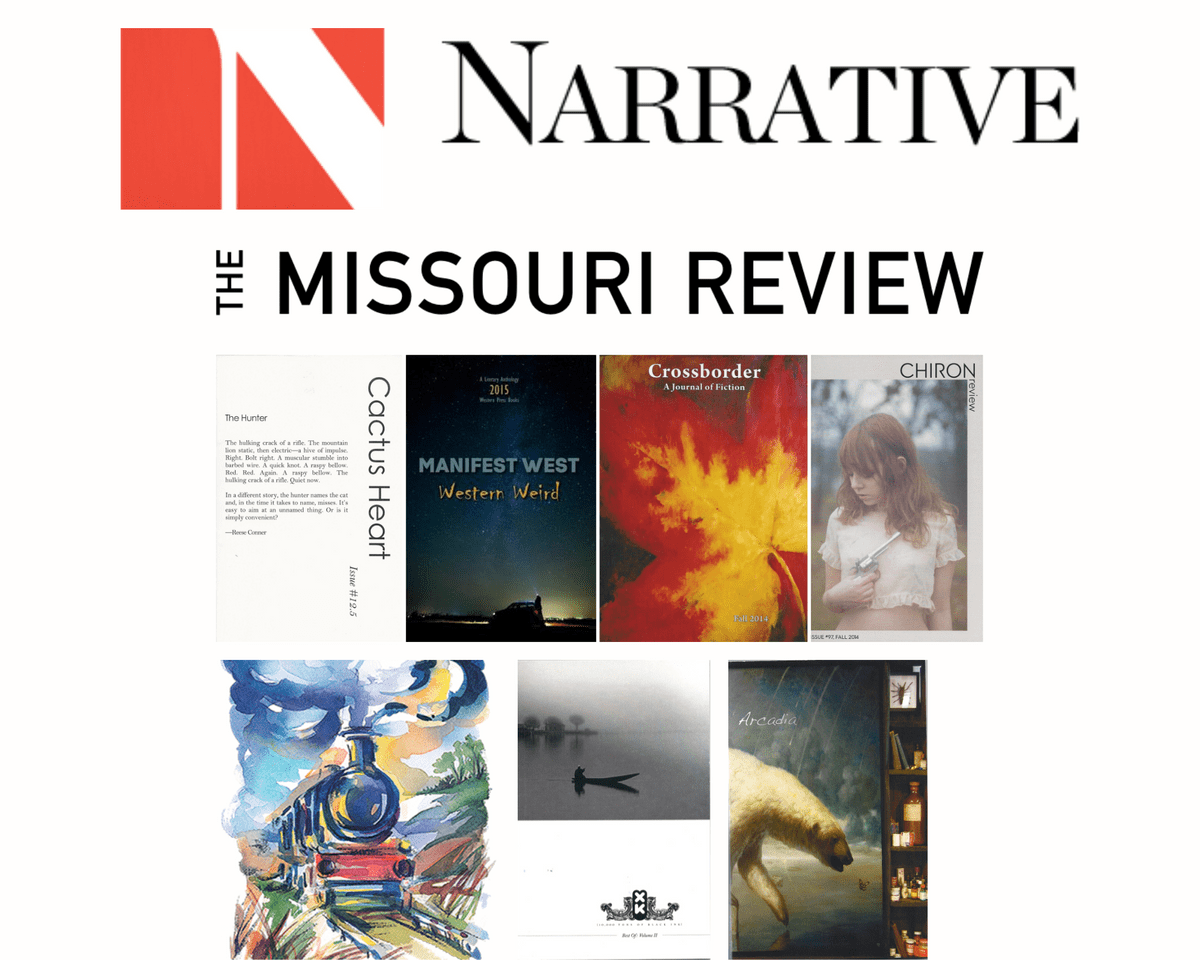
My short story, “Twelve Pencils,” was selected to appear in 10,000 Tons of Black Ink’s “Best Of,” Volume II, edition. The story originally appeared online in May 2011, and will make its second appearance in the print edition — celebrating all six honorees — on March 23.
Literary Writers Network is based in Chicago, and publishes 10,000 Tons. It’s their goal to “represent the best of what is freshly pouring from the pens of today’s most talented, creative, and hardworking authors.” Thanks so much, LWN! (Read more about them here.)
My Heroes Have Always Been Cowboys
Remember “My Heroes Have Always Been Cowboys,” the Willie Nelson song from the soundtrack to 1979′s Electric Horseman? Well, this is the way I feel, too, and I think it’s safe to say my husband Steve might well have been a cowboy, had the stars aligned just so.
He spent his younger days dreaming about riding the range, roping horses, and scratching his belly and such.
He was even born in Hawthorne, Nevada, and before the age of four had the look of a young cowhand. His dad looks like a movie star, doesn’t he? Rock Hudson / Troy Donahue, all rolled into one.
By eight or nine, he had the attitude, too. He shot birds and bad guys, like most cowboys, and probably a few girls, as well — although in later years, he came to like girls and so regretted zinging their bouffants.
This photo was taken in Fallon, Nevada — real cowboy country. Steve is the tall kid in the middle. By now he genuinely looks the part: jeans, boots, plaid shirt, and a hat that sits properly on his head. The girls, though, are relegated to tennis shoes and cotton slacks, probably because “girl” jeans hadn’t been invented yet. His younger brother (in the matching shirt) has a dime-store cowboy hat, and the kid (leaning on the wall) left his hat at home. (I don’t need no stinkin’ hat — I’m stylin’ with this hairdo.)
This is one of my favorite photos of Steve — he’s not wearing a hat here, but he is working the range. In 1976, after he graduated with a double major in range management and wildlife biology, he couldn’t find a job as a biologist, and so hired on as a temporary for the Bureau of Land Management. He lost 25 pounds on this job, because they put him to work “running horses.” This was back in the day, when the BLM had a very active wild mustang roundup program, and it was Steve’s job to help corral them. He was gone for days at a time, working in the heat and dust, and over the space of one long, hot summer, he dropped below his swimming weight in high school. (I was pregnant with our first child, and weighed as much as he did.)
Here he is, my hero, feeding yearlings gathered in the roundup. About a year later, a wildlife biologist position opened with the US Fish & Wildlife Service at Malheur National Wildlife Refuge, and he applied. He got the job and said goodbye to the BLM and cowboy hats, but the West is still tight in his heart.
Say Hey to Renee at Flyway Nights
Join me on Thursday, March 1, at the Yolo Basin Foundation’s Flyway Nights Lecture Series, where I’ll talk about the plume-hunting trade of the late 1800s, and the inspiration for my novel THE PLUME HUNTER. We’ll meet at the Yolo Bypass Wildlife Area Headquarters building (directions here) for the 7:00 p.m. presentation. A $5 donation ($10 for families) is requested at the door. I’ll have books for sale, and will give away one free copy of THE BRIDGE AT VALENTINE for every copy of PLUME purchased.
Hope to see you there!


Amazon